
Single Tooth Dental Implants
One missing tooth changes more than your smile. It changes how you chew on that side of your mouth, how your bite settles, and over time, how much bone is left underneath the gap. A single tooth dental implant replaces the whole tooth, root and crown, so the rest of your mouth doesn't have to compensate for what's missing.
At Southbridge Dentistry & Implants, Dr. Pradeep Bholla plans and places single tooth implants using CBCT 3D imaging, so we know exactly how much bone you have before we ever touch a drill. If you're missing one tooth and trying to decide what to do about it, here's what you actually need to know.
What Is a Single Tooth Dental Implant?
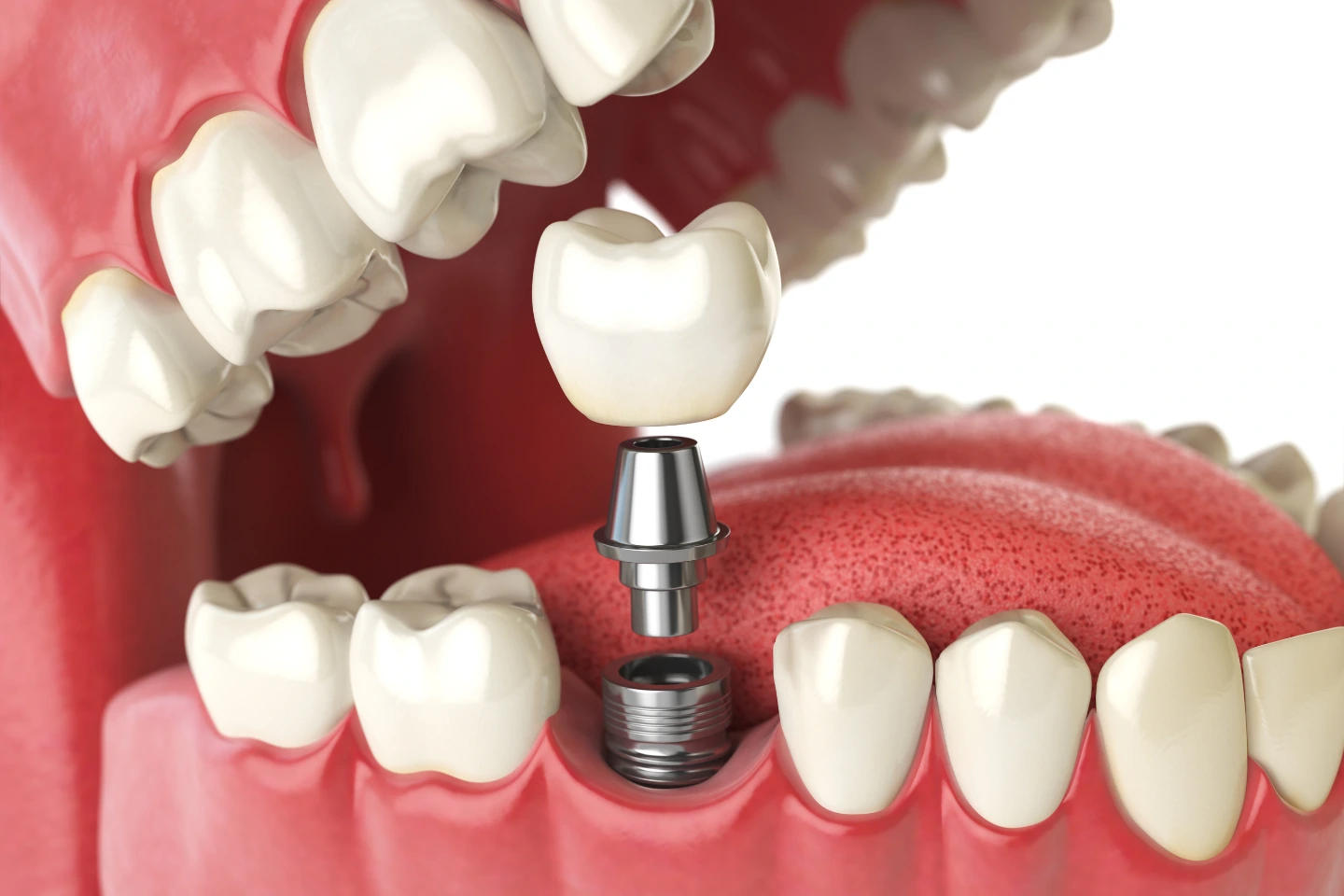
A single tooth dental implant is a small titanium or zirconia post that's placed into the jawbone where a tooth root used to be. Once the bone heals around it, an abutment connects the post to a custom crown that matches the color, shape, and size of your natural teeth.
Unlike a bridge, a single implant doesn't touch the teeth next to it. Unlike a partial denture, it doesn't come out at night. It functions as its own standalone tooth, held in place by bone rather than by clasps or neighboring teeth.
Quick answer: a single tooth implant has three parts, the implant fixture (the "root"), the abutment (the connector), and the crown (the visible tooth). All three work together to replace one missing tooth without altering the teeth around it.
Who Is a Good Candidate?
Most healthy adults missing one tooth are candidates. You're likely a good fit if you:
- Have one missing, badly damaged, or recently extracted tooth
- Have enough jawbone to support an implant, or can have a small bone graft first
- Have healthy gums with no active periodontal disease
- Don't smoke, or are willing to pause during healing
- Are in general good health with no conditions that slow bone healing
Bone loss is the most common reason people assume they're not candidates, but it's rarely a dead end. A CBCT scan tells us in minutes whether you have enough bone or whether a graft would give you a solid foundation first.
Signs You May Need One
You may want to talk to us about a single tooth implant if you:
- Have a gap from a tooth that was removed and never replaced
- Have a tooth that's cracked, infected, or failing and can't be saved
- Notice your bite shifting or nearby teeth drifting toward the empty space
- Feel self-conscious smiling or covering your mouth because of a gap
- Have been told you're losing bone in the area of a missing tooth
The longer a gap sits untreated, the more bone tends to shrink underneath it. That's one reason dentists rarely recommend waiting once a tooth is gone.
Benefits of Replacing One Missing Tooth with an Implant
- Preserves bone. The implant post stimulates the jawbone the way a natural root does, which helps prevent the bone loss that follows tooth loss.
- Protects neighboring teeth. No healthy teeth need to be filed down to anchor a bridge.
- Looks and feels natural. The custom crown is shaded and shaped to blend in with your smile.
- Restores full chewing function. You can bite into an apple or steak on that side again without worrying about slipping.
- Built to last. With good hygiene and regular checkups, an implant can last decades, often a patient's lifetime.
- Easy to maintain. Brush and floss it like a normal tooth. No special soaking or adhesives.
Dental Implant vs. Dental Bridge
An implant doesn't touch the teeth next to it, while a bridge requires filing down the healthy teeth on either side of the gap to anchor crowns. An implant also stimulates the jawbone the way a natural root does, so it helps prevent the bone loss that a bridge can't stop. Implants typically last 20 or more years, often a lifetime with good care, while bridges average 10 to 15 years before needing replacement. Cleaning is simpler with an implant too, since you brush and floss it like a normal tooth, whereas a bridge usually needs floss threaders or a water flosser to clean underneath it. A bridge can be completed in a few weeks, while an implant takes several months mostly for healing, so it comes down to a tradeoff between a faster timeline and a stronger long-term outcome.
Direct answer: an implant is generally the stronger long-term choice because it doesn't rely on your other teeth and it protects the bone underneath. A bridge can still make sense if you want a faster timeline or you're not a surgical candidate.
Dental Implant vs. Partial Denture
An implant is fixed permanently in place and won't shift while you eat or talk, while a partial denture is removable and relies on clasps that can move and irritate the gums and nearby teeth. An implant also maintains bone density in the jaw, something a partial denture can't do since it simply sits on top of the gums. Daily care differs too: an implant needs no special removal or nightly soaking, while a partial denture has to come out every night for cleaning. The tradeoff is upfront cost, since a partial denture is less expensive at first, but an implant tends to pay for itself over time by avoiding replacements and the bone loss that comes with a removable option.
A partial denture can be a reasonable short-term or budget solution, but most patients who switch from a partial to an implant later say they wish they'd started with the implant.
Our Single Tooth Implant Process
Consultation. We start by listening to what happened to the tooth and what you're hoping for, then do a clinical exam.
Digital Imaging. A CBCT 3D scan maps your jawbone density, nerve position, and sinus location so we can plan placement with precision instead of guesswork.
Treatment Planning. Dr. Bholla reviews the scan and builds a plan specific to your bone structure, including whether a bone graft is needed first.
Implant Placement. The titanium or zirconia post is placed into the jawbone under local anesthesia. Most patients describe the procedure itself as far less uncomfortable than they expected.
Healing & Osseointegration. Over the next three to six months, your jawbone fuses to the implant surface in a process called osseointegration. This is what gives the implant its strength.
Abutment Placement. Once healing is confirmed, a small connector piece is attached to the implant to support the crown.
Custom Crown Placement. Your final crown, shaped and shaded to match your smile, is placed and adjusted for a comfortable bite.
Technology We Use
- CBCT 3D Imaging to map bone density and plan implant placement with accuracy
- CAD/CAM technology for precisely fitted, same-visit restorations when appropriate
- Intraoral scanning for a comfortable, impression-free digital model of your mouth
Why Choose Our Practice
Dr. Pradeep Bholla completed a Prosthodontics residency and is a Fellow (2016) and Diplomate (2018) of the International Congress of Oral Implantologists, a credential that reflects hundreds of hours of advanced implant training beyond dental school. He's placed and restored implants for over a decade, and our office keeps every stage of single tooth implant treatment, imaging, placement, and the final crown, under one roof so you're not bounced between specialists for routine cases.
We also carry major dental insurance plans and offer in-house financing options, so cost doesn't have to be the reason a gap goes untreated.
Recovery & Aftercare
Most patients return to normal activities within a few days of implant placement. Mild swelling, tenderness, or minor bruising is normal for the first 48 to 72 hours. We recommend:
- Soft foods for the first few days
- Cold compresses to manage swelling
- Gentle brushing around the surgical site
- Avoiding smoking, which slows bone healing significantly
- Taking any prescribed antibiotics or pain medication as directed
Most discomfort is manageable with over-the-counter pain relievers, and many patients say it's less painful than the extraction that preceded it.
Risks & Safety
Dental implants have a success rate around 95 to 98 percent when placed by an experienced provider on a healthy candidate. As with any surgical procedure, risks exist and include infection, minor nerve irritation, or, in rare cases, the implant not fully integrating with the bone. CBCT imaging before placement significantly reduces these risks by giving us an accurate map of nerves, sinuses, and bone before we start. If an implant doesn't integrate, it can typically be removed and reattempted after the site heals.
How Long Do Single Tooth Implants Last?
The implant post itself, once fused to the bone, often lasts a lifetime. The crown on top typically lasts 15 to 20 years before it may need replacement due to normal wear, similar to how a natural tooth's enamel wears over decades. Regular checkups let us catch crown wear or gum changes early, long before they become a problem for the implant underneath.
Cost Factors
Single tooth implant cost varies based on a few specific factors:
- Whether a bone graft or extraction is needed beforehand
- The materials used for the crown and implant post
- Diagnostic imaging and treatment planning involved
- Any sedation options chosen for comfort
Because every case is different, we provide a personalized cost estimate after your consultation and CBCT scan, not before.
Insurance & Financing
Many dental insurance plans cover part of implant treatment, particularly diagnostic imaging and the extraction if one is needed, though implant coverage itself varies widely by plan. Our team will review your benefits with you and explain what's covered. We also offer in-house financing options to help spread the cost of treatment over time, so a tight budget doesn't have to mean living with a gap.
Myth vs. Fact
Myth: Getting an implant for just one tooth isn't worth it. Fact: A single implant protects your jawbone and nearby teeth in a way that bridges and partials can't, which often makes it the more cost-effective option over 15 to 20 years.
Myth: Implant surgery is extremely painful. Fact: Most patients report less discomfort than they expected, often less than a tooth extraction, and it's well managed with local anesthesia and standard pain relievers.
Myth: If you've lost bone, you can't get an implant. Fact: A bone graft can rebuild the foundation needed for an implant in the large majority of cases.
Myth: Implants look fake. Fact: A well-made crown is custom shaded and shaped to match your surrounding teeth, and most people can't tell which tooth is the implant.
Key Takeaways
- A single tooth implant replaces one missing tooth without affecting neighboring teeth
- It's the only replacement option that actively preserves jawbone
- CBCT imaging determines candidacy and bone needs before treatment starts
- The full process typically spans three to six months, mostly healing time
- With proper care, the implant post can last a lifetime
Frequently Asked Questions
Q. What is a single tooth dental implant?
It's a titanium or zirconia post placed in the jawbone to replace a missing tooth's root, topped with an abutment and a custom crown that matches your natural teeth.
Q. How much does a single tooth dental implant cost?
Cost depends on whether a bone graft or extraction is needed, the materials used, and your specific treatment plan. We provide an exact estimate after your CBCT scan and consultation.
Q. Is a single tooth implant painful?
The procedure is done under local anesthesia, and most patients report mild discomfort afterward that's manageable with over-the-counter pain relievers, often less than what they felt with the original tooth problem.
Q. How long does the whole process take?
Typically three to six months from placement to final crown, mostly due to the time bone needs to fuse to the implant during osseointegration.
Q. Can I get an implant if I have bone loss?
In most cases, yes. A bone graft can rebuild the area first, and CBCT imaging tells us exactly how much bone is available before we recommend a plan.
Q. Is a single tooth implant better than a bridge?
For most patients, yes, because it doesn't require altering the teeth next to the gap and it helps preserve the jawbone underneath, which a bridge does not do.
Q. Will the implant crown match my other teeth?
Yes. Crowns are custom shaded and shaped to blend with your surrounding natural teeth.
Q. What happens if I don't replace a missing tooth?
The jawbone under the gap tends to shrink over time, nearby teeth can drift, and your bite can shift, sometimes causing problems for teeth on the opposite side of your mouth too.
Q. Does insurance cover single tooth implants?
Coverage varies by plan. Some plans cover diagnostic imaging or extraction, while implant coverage itself differs. Our team reviews your benefits and explains your options during your visit.
Q. How long do single tooth implants last?
The implant post can last a lifetime with proper care. The crown on top typically lasts 15 to 20 years before normal wear may call for a replacement.
Q. Am I too old to get a dental implant?
There's no upper age limit for implants. As long as you're in reasonably good health with adequate bone, age alone doesn't rule you out.
Q. What is osseointegration?
It's the biological process where your jawbone fuses directly to the surface of the implant post, creating the strong foundation that makes implants so durable.
Schedule Your Consultation
A missing tooth doesn't get easier to ignore, and the bone underneath it doesn't wait. If you're ready to find out whether a single tooth implant is right for you, our team in Southbridge is ready to walk you through it, starting with a CBCT scan and an honest conversation about your options. Serving Southbridge, Sturbridge, Dudley, and Charlton, MA. Call (508) 909-6122 or request your consultation online today.


Hours
Monday: 9:00 AM – 7:00 PM
Tuesday – Friday: 9:00 AM – 6:00 PM
Saturday: 9:00 AM – 3:00 PM
Sunday: Closed




© 2026 Southbridge Dentistry & Implants | All Rights Reserved | Privacy Policy | HIPAA Policy | Digital Marketing by Remedo