
Dental Implants vs Bridges: Which Lasts Longer?
When you lose a tooth, the world suddenly feels a bit different. You might find yourself chewing on one side of your mouth or covering your face when you laugh. The good news is that modern dentistry has two excellent ways to fix the problem: dental implants and dental bridges. But if you are going to invest your time and money into a restoration, the first thing you probably want to know is which one is going to stay with you the longest.
At Southbridge Dentistry and Implants, we help patients from all over the Southbridge, MA area weigh these options. Choosing between a bridge and an implant is not just about the upfront cost or how many appointments it takes. It is about looking at the next ten, twenty, or even thirty years of your life. While both options are designed to restore your smile and your ability to eat, they interact with your mouth in very different ways. Understanding these differences is the best way to figure out which one is the right fit for your long term goals.
The Foundation of the Dental Bridge
For decades, the dental bridge was the standard way to fill a gap. The concept is simple: you use the healthy teeth on either side of the space to support a fake tooth in the middle. These two healthy teeth are capped with crowns, and the replacement tooth is fused between them.
A bridge is a reliable and time tested solution. It is usually a faster process than an implant, often requiring only two or three visits. Because it sits above the gumline, it does not require surgery. However, the lifespan of a bridge is closely tied to the health of those anchor teeth. Because those teeth have to be filed down to fit the crowns, they are under more stress than they would be naturally.
Most people find that a well made bridge can last anywhere from five to fifteen years. Some people have them even longer, but at some point, the bridge may need to be replaced. This usually happens because the cement wears out or because decay starts to form at the edges where the crown meets the natural tooth.
How Dental Implants Change the Game
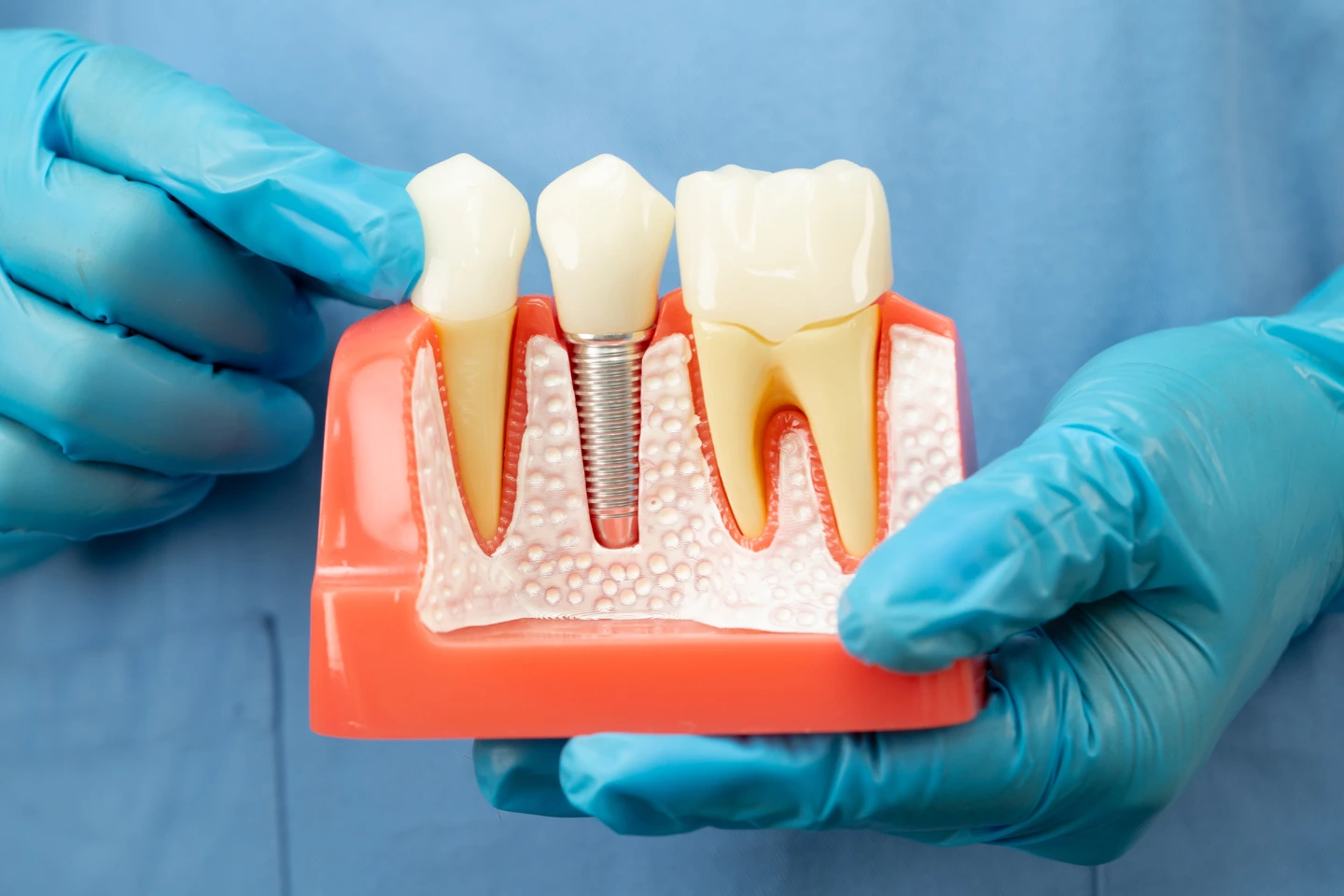
A dental implant takes a completely different approach. Instead of leaning on the neighboring teeth for support, an implant stands on its own. It involves placing a small titanium post directly into the jawbone. This post acts as an artificial root. Over a few months, your bone actually grows around the titanium, locking it permanently in place. Once that foundation is solid, a custom crown is attached to the top.
The big advantage here is that an implant behaves just like a natural tooth. It stimulates the jawbone, which prevents the bone loss that usually happens when a tooth is missing. Because it does not rely on the surrounding teeth, those teeth remain untouched and healthy.
When it comes to how long they last, implants are often seen as a long lasting or potentially lifelong solution. While the porcelain crown on top might experience some wear and tear over a decade or two and may eventually need to be replaced, the titanium post itself is designed to stay in your jaw for many years or decades. This is why many people see them as the most durable option available today.
Comparing the Lifespan Variables
While we can talk about averages, the truth is that the longevity of any dental work depends heavily on what happens after you leave the office. Here are the main factors that influence how long your restoration will stay in top shape.
Bone Health and Stability
For an implant, the bone is everything. If you have plenty of healthy bone density, the implant has a great chance of staying secure forever. If the bone starts to thin out because of age or health issues, the implant could lose its stability. For a bridge, the bone is less of a factor for the restoration itself, but if the bone underneath the bridge shrinks, it can create a gap where food gets stuck, leading to decay on the anchor teeth.
Your Daily Hygiene Routine
This is the part you have the most control over. Even though a bridge and an implant are not made of natural tooth material, the gums and bone around them are very much alive. If plaque builds up around a bridge, it can lead to cavities on the teeth holding the bridge in place. If plaque builds up around an implant, it can cause an infection called peri-implantitis, which can cause the implant to fail. Brushing and flossing are just as important for your dental work as they are for your real teeth.
Physical Wear and Tear
Do you grind your teeth at night? Do you have a habit of chewing on ice or pen caps? This kind of pressure can chip the porcelain on either a bridge or an implant crown. If you are a known grinder, we usually recommend a night guard to protect your investment. The physical strength of the materials used is very high, but they are not indestructible.
The Long Term Financial Perspective
It is no secret that an implant costs more upfront than a bridge. It involves more specialized parts and a surgical component. However, when you ask which one lasts longer, you also have to ask about the cost of replacement.
If you get a bridge at age forty and it needs to be replaced every ten years, you might end up paying for three or four bridges over your lifetime. Each time a bridge is replaced, the anchor teeth have to be reshaped, which can eventually lead to those teeth needing root canals or even being lost themselves.
An implant is a larger one time investment. If it is successful and you take care of it, you may never have to pay for that tooth replacement again. For many people, paying more now to avoid multiple procedures in the future is a smart trade off.
Frequently Asked Questions
Q: Is the surgery for an implant painful?
A: Most patients at Southbridge Dentistry and Implants are pleasantly surprised. We use local anesthesia to numb the area, so you should not feel any pain during the procedure. Most people report that the recovery feels similar to a simple extraction and can be managed with standard over the counter pain relief for a few days.
Q: Can a bridge be replaced with an implant later?
A: In many cases, yes. If your old bridge has failed and the anchor teeth are no longer healthy, we can often look into placing implants to fill the gap. We would just need to evaluate your bone density to make sure there is enough support.
Q: How do I clean under a dental bridge?
A: Cleaning under a bridge requires a bit more effort. You have to use special floss threaders or a water flosser to get underneath the fake tooth and clear out any trapped food or plaque. An implant is easier to clean because you can just brush and floss it like a normal tooth.
Q: Will people be able to tell the difference?
A: Modern porcelain and ceramic materials are incredibly lifelike. Whether you choose a bridge or an implant, the final result will be shade matched to your natural teeth. Most people will never know you had dental work done.
Q: What if I have insurance?
A: Every plan is different, but many insurance companies now offer some coverage for both bridges and implants. Bridges are often covered as a basic or major service. Implants were once considered elective, but many providers now recognize them as a standard of care and provide a percentage of coverage.
Making the Right Choice for Your Life
At the end of the day, there is no single right answer for everyone. A bridge might be the best choice if you want a faster result without surgery or if the teeth next to the gap already need crowns anyway. An implant is usually the best choice if you want the longest lasting solution that preserves your natural bone and neighboring teeth.
When you sit down with our team at Southbridge Dentistry and Implants in Southbridge, MA, we look at your health history, your budget, and what you want your smile to look like in twenty years. We want you to feel confident in your decision. Replacing a tooth is about more than just filling a hole; it is about giving you back the freedom to eat what you want and smile whenever you feel like it.
If you are trying to decide which path to take, we invite you to come in for a consultation. We can take the necessary X-rays, look at your specific situation, and give you an honest assessment of which option is likely to last the longest for your unique mouth. Your health is the priority, and we are here to help you find a solution that keeps you smiling for a lifetime.


Hours
Monday: 9:00 AM – 7:00 PM
Tuesday – Friday: 9:00 AM – 6:00 PM
Saturday: 9:00 AM – 3:00 PM
Sunday: Closed




© 2026 Southbridge Dentistry & Implants | All Rights Reserved | Privacy Policy | HIPAA Policy | Digital Marketing by Remedo